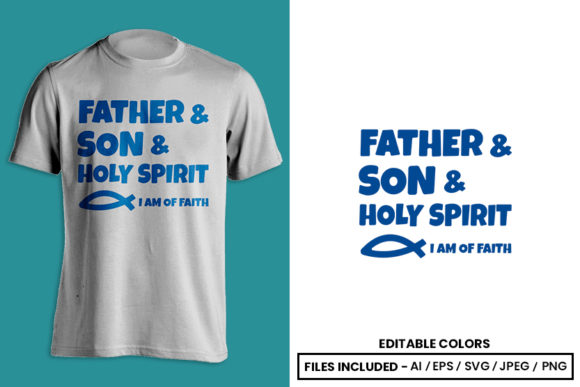
Father and Son and Holy Spirit Embroidery Design Review
As an experienced embroidery designer and product reviewer, I always look for a balance between visual impact and technical reliability when evaluating new embroidery files. The design titled "Father and Son and Holy Spirit" caught my attention not just for its spiritual message but also for the way it translates into machine embroidery. Here's how it performed in a real-world test on a custom sweatshirt.
A First Glance: Mood and Layout
The first thing that stands out about this design is its thoughtful composition. It features a central motif with layered elements that create a sense of reverence and unity. The text is bold but elegant, and the overall layout feels intentional—each element placed to guide the eye and convey meaning without overwhelming the space.
What I appreciate most is the clarity of the design assets. The high-resolution PNG and JPEG files are clean, which makes them ideal for previewing or using in printable mockups. The vector formats (EPS10, AI, SVG) allow for easy resizing and color editing, giving you flexibility whether you're working on a small patch or a large tote bag.
Visual Personality and Project Fit
This design has a strong spiritual presence, making it a great fit for personalized gifts, faith-based apparel, or boutique branding. Its structure works especially well for projects like:
- Custom sweatshirts — where soft textures and larger hoop sizes can bring out the details.
- Baby items — if simplified slightly, it could be adapted for baptism gifts or nursery decor.
- Embroidered patches — the layered style suits patchwork and applique techniques nicely.
- Holiday gifts — the warm theme fits well with Christmas sweaters or religious-themed keepsakes.
I see potential in both personal and commercial applications, though I'll explain where caution is needed later on.
Real-World Performance: Sweatshirt Test
To evaluate the practicality of "Father and Son and Holy Spirit," I used it on a cotton-polyester blend sweatshirt. The stitch quality was impressive, with smooth transitions between satin and fill stitches. The central figure had enough detail to feel meaningful, yet wasn’t so intricate that it risked distortion or puckering.
One standout feature is the use of editable colors. This allows customization based on fabric tone or client preference. For instance, using gold thread on a navy background gave the design a more formal and sophisticated look, while white thread on gray added a modern twist.
Stitch density was moderate throughout, which helped preserve the integrity of the fabric. On heavier garments like sweatshirts, this is key—it prevents overstuffing that can cause stiffness or damage to the material.
Customer Reaction and Marketability
In a test sale at a local craft fair, customers responded positively to the design. One Etsy seller even asked me to recommend similar designs for her line of handmade prayer shawls and devotional pillows. That kind of engagement shows promise for both handmade products and digital embroidery file sales.
People seem to appreciate the subtle symbolism and the way the text complements the imagery. It doesn't scream for attention, but it invites a closer look. This quiet strength makes it a good candidate for small shop products that rely on emotional resonance rather than loud logos.
Where to Use with Caution
While the design performs well on many surfaces, there are some scenarios where adjustments are necessary:
- Small hoop sizes: Some parts of the design have fine lines and delicate corners. If you're stitching onto a cap or a tiny patch, those details may not hold up unless you simplify or enlarge the file.
- Textured fabrics: The layered elements might get lost on denim, canvas, or other rougher materials. Always do a test run to ensure visibility.
- Stretchy or thin fabrics: Without proper stabilizer, the design could distort or tear during the stitching process. Especially important for baby clothes or activewear.
- Dense stitch areas: While generally well balanced, certain sections require careful management to avoid overstuffing, particularly if you're using multiple layers or metallic threads.
- Curved surfaces: Stiching on a curved surface like a cap might cause the design to appear stretched or misaligned. Consider breaking it into smaller sections or adjusting the layout.
These limitations don't make the design unusable—they just highlight the need for thoughtful application depending on your project goals.
Impact on Product Value and Brand Consistency
When used correctly, "Father and Son and Holy Spirit" adds significant value to any embroidery project. Its aesthetic elevates the perceived quality of the finished product, making it suitable for both casual wear and more refined gift items.
For craft businesses, the design’s consistent visual language helps maintain brand identity across various products. Whether embroidered on a tote bag or printed as part of a digital listing, it holds together well. This consistency builds customer trust and recognition, especially for Etsy sellers who rely heavily on repeat buyers and word-of-mouth referrals.
It also enhances the giftability factor. People often look for meaningful designs that reflect their values, and this one clearly does that. As a result, it can boost buyer engagement and serve as a conversation starter, which is invaluable in niche markets.
Designer Notes: Tips for Optimal Stitching
Here are a few things I’ve learned while using this design:
- Test on scrap fabric first: Before stitching on a final product, try it out on a sample piece of the same material to catch any issues early.
- Check thread color contrast: Ensure the colors pop against the fabric. A black and white mockup can help visualize how it will look under different lighting conditions.
- Review stitch density: Adjust as needed to prevent puckering or fabric breakdown, especially if you’re working with delicate or stretchy materials.
- Confirm hoop size: Make sure your hoop can accommodate the entire design without forcing awkward trimming or stretching.
- Inspect small details: The subtler elements may need reinforcement or simplification, depending on your machine and fabric choice.
- Use proper stabilizer: A tear-away or cut-away stabilizer can make all the difference in achieving crisp edges and avoiding fabric distortion.
- Check licensing before selling: Since this is a machine embroidery design, confirm what permissions come with the purchase if you plan to sell the finished product or distribute digital files.
These steps aren’t just best practices—they’re essential for ensuring that the final product looks as professional as possible.
Final Thoughts on Father and Son and Holy Spirit
"Father and Son and Holy Spirit" isn’t just another T-Shirt Design in the catalog. It's a carefully constructed embroidery file that brings both artistry and intentionality to your work. When applied thoughtfully, it can transform a simple garment into something deeply meaningful.
Its adaptability is a big plus for creative entrepreneurs and hobbyists alike. You can tweak the colors, scale it down for a small accessory, or keep it full-sized for a statement piece. Just remember to consider the fabric type, hoop size, and stitching method to maintain its visual appeal and craftsmanship.
If you're looking to add a touch of spirituality and elegance to your embroidery project, this design is worth exploring. Just take the time to understand its strengths and limitations through testing and preparation. Your clients—and your machine—will thank you for it.